Pap's Mega Store
PowMr 60A MPPT Solar Charge Controller 12V /24V /36V/48V Charger for 720W-2800W off grid Controller Max PV 160V LED LCD Display
PowMr 60A MPPT Solar Charge Controller 12V /24V /36V/48V Charger for 720W-2800W off grid Controller Max PV 160V LED LCD Display
Couldn't load pickup availability
SPECIFICATIONS
Application: Home
Brand Name: PowMr
Certification: CE
Hign-concerned Chemical: None
Load Power (W): 720W-2800W
Model Number: HHJ60-PRO
Origin: Mainland China
Output Voltage (V): 12V/24V/36V/48V
Solar Power (W): 720W-2800W
Specification: Normal
Work Time (h): 24
is_customized: Yes
Overview
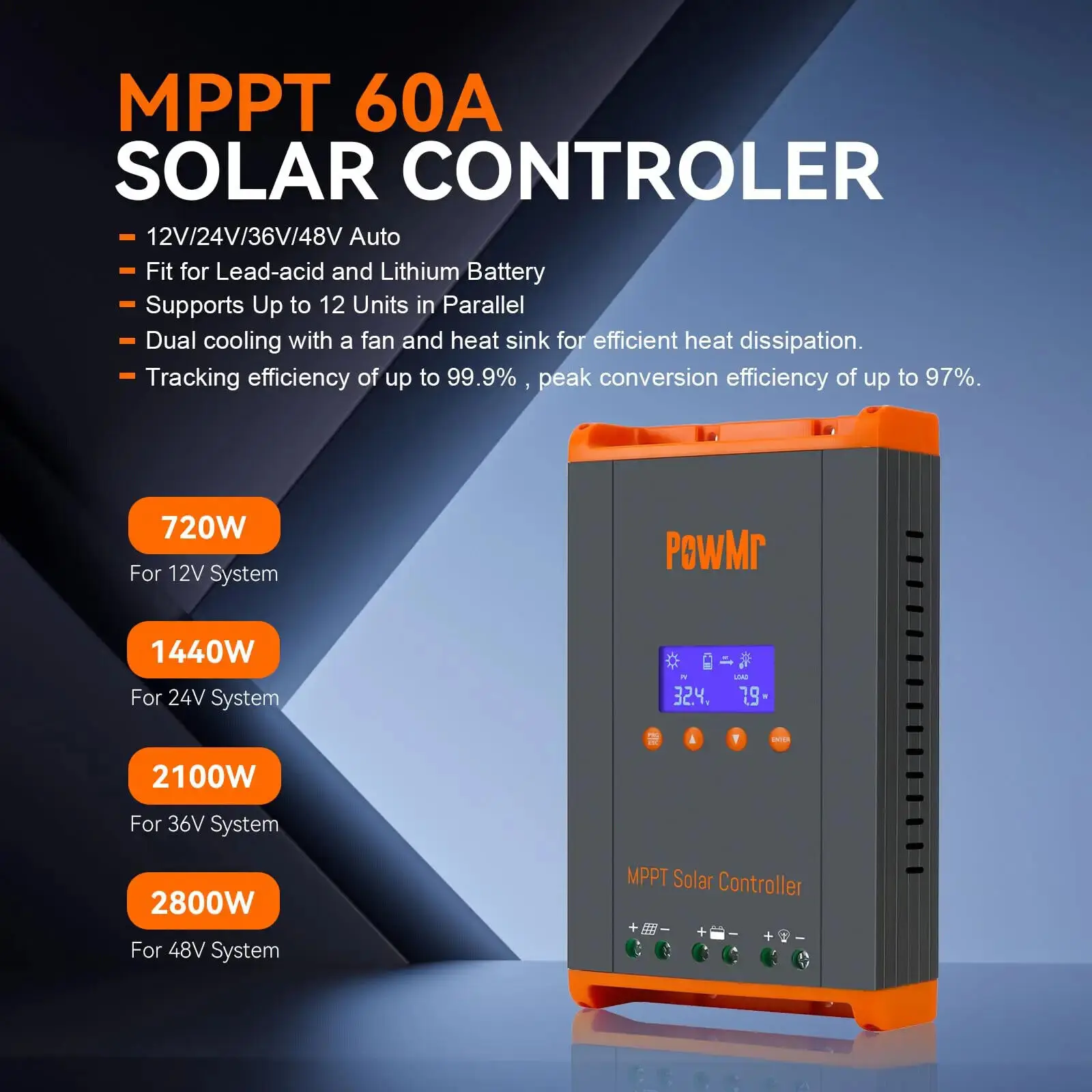
The latest version of the POWMR 60A MPPT (HHJ60-Pro) solar charge controller, 12V/24/36/48V Auto, Max PV 160V, Common Negative Ground, features advanced MPPT technology with high tracking efficiency of 99.5% and peak conversion efficiency of 98%. Maximize the energy from solar panels to charge your battery for off-grid solar systems.
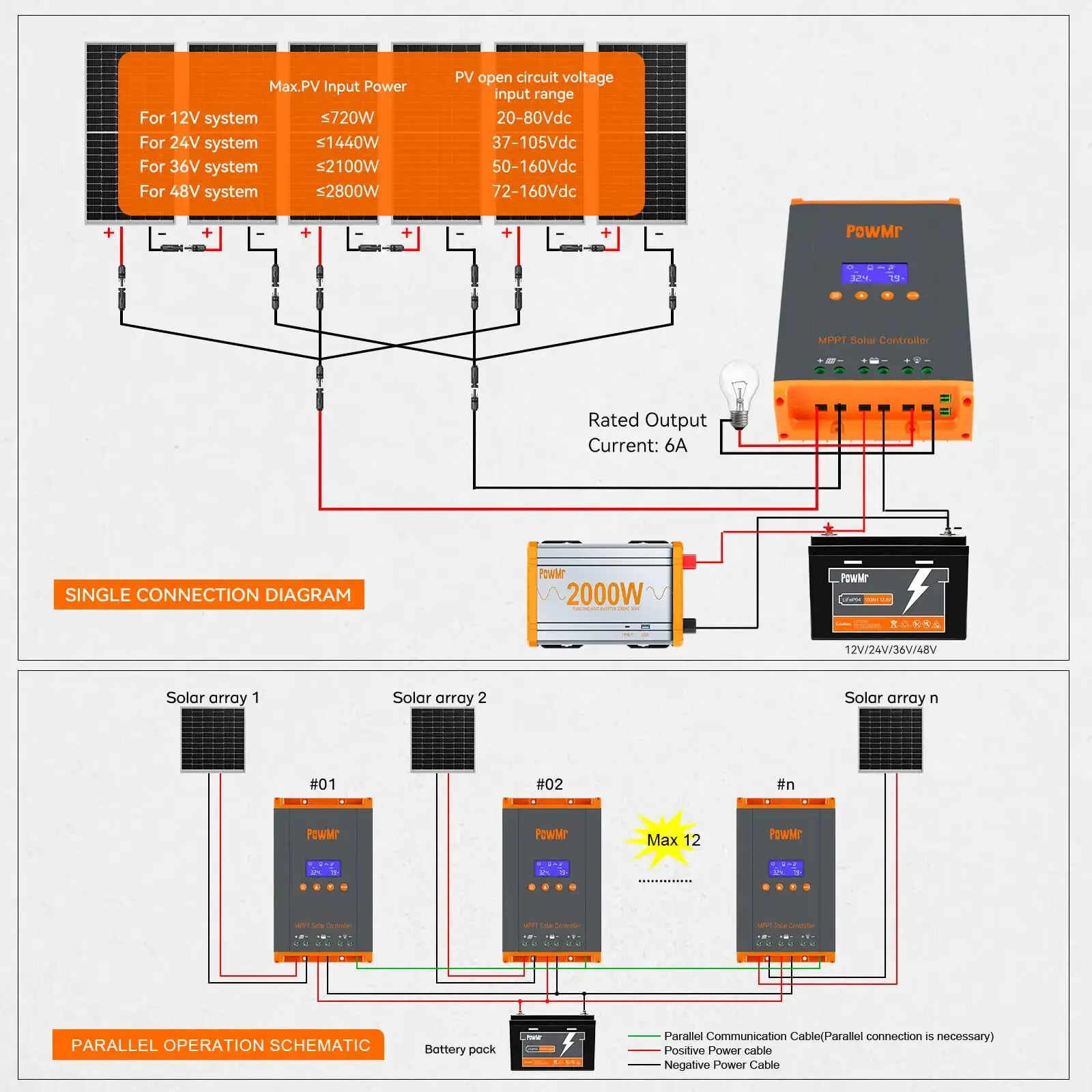
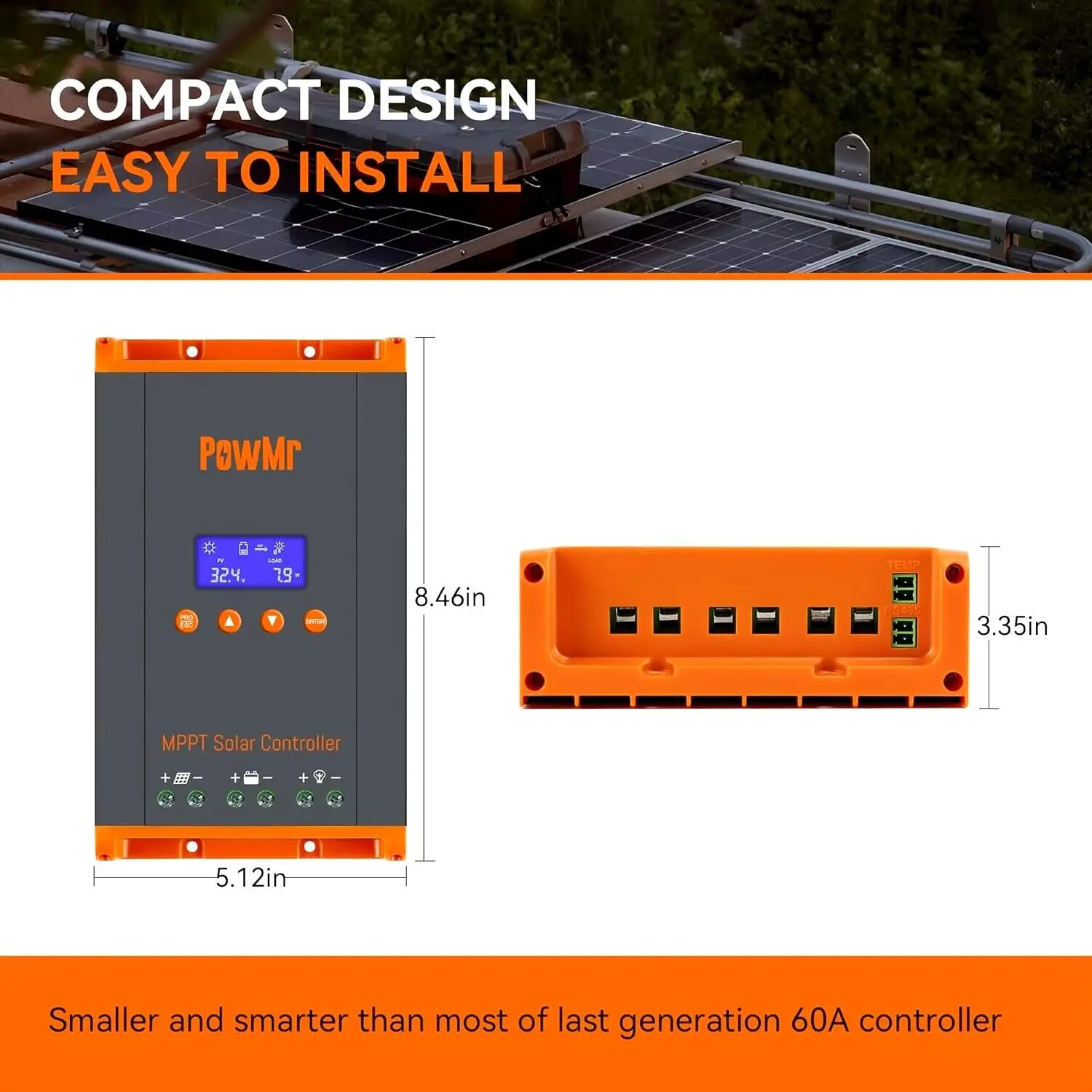
Maximum PV input power: 720W charging for a 12V battery system, or 1440W charging for a 24V battery system. The 60A MPPT controller is equipped with a common negative ground and can be used for various applications, such as communication base stations, household systems, street lighting systems and field monitoring, and RV solar systems.
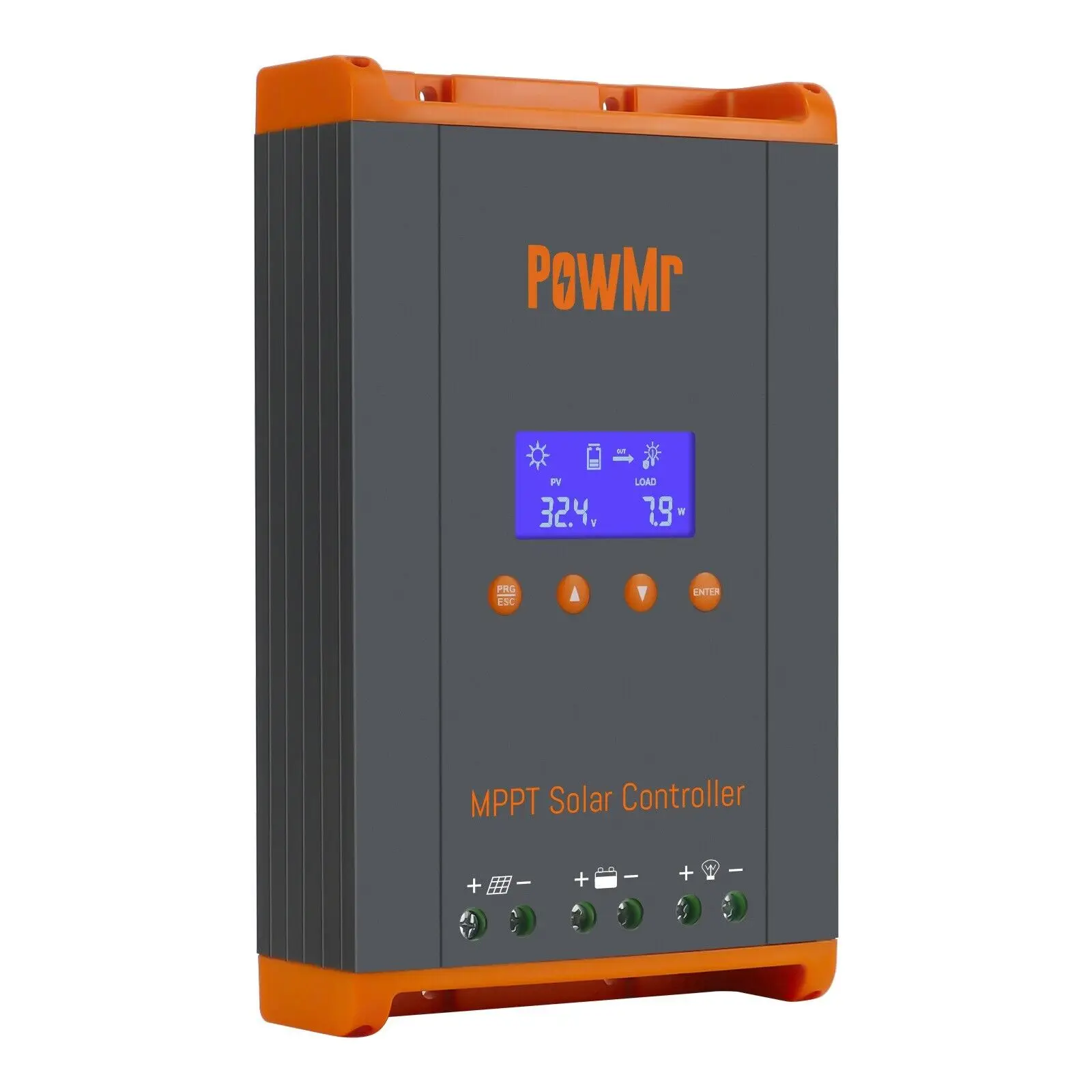
Three color LED indicators and an LCD display intuitively indicate the operating status of the PV/battery/load. Five buttons for easier setting and searching of system parameters (further parameter settings can be made via the POW-Meter remote display.
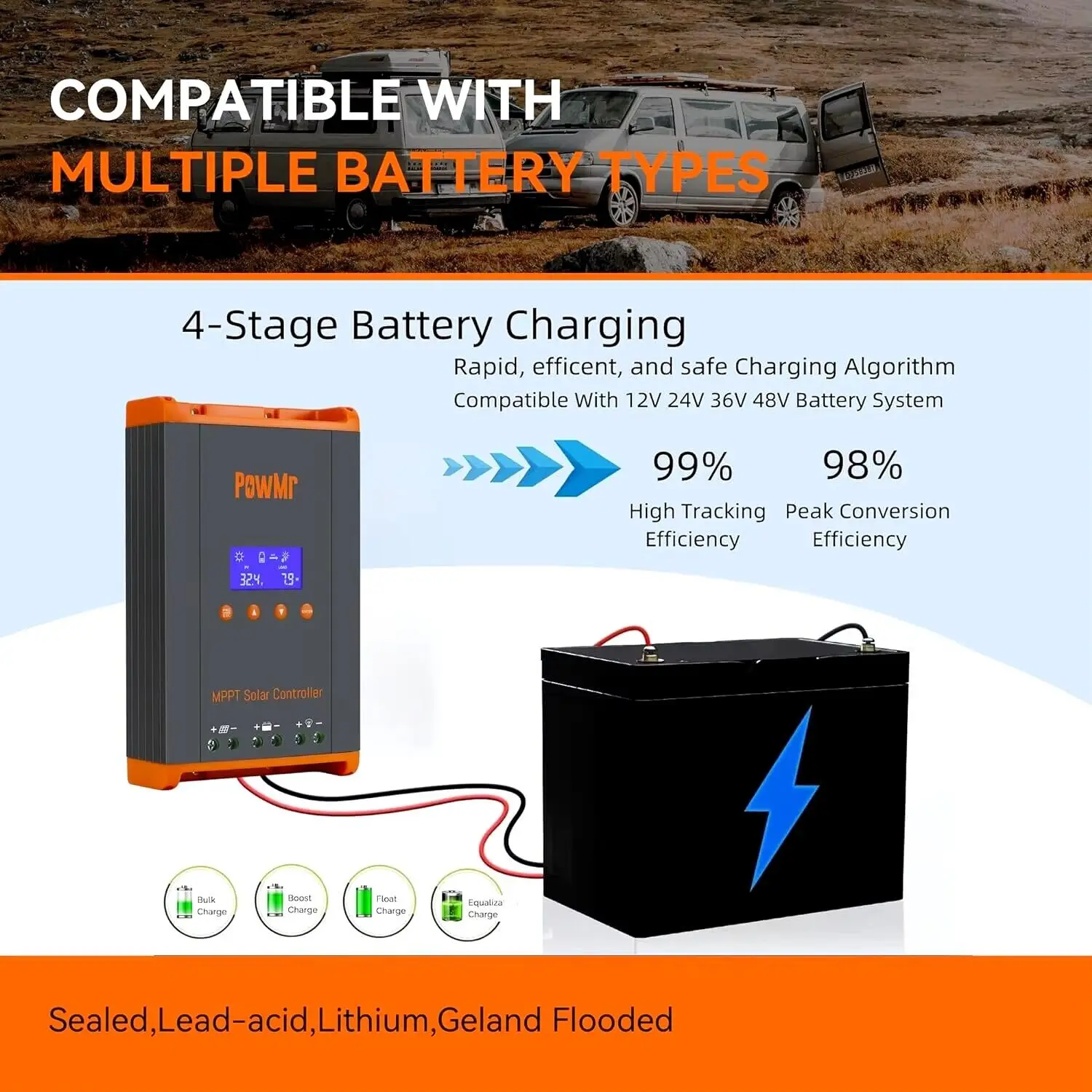
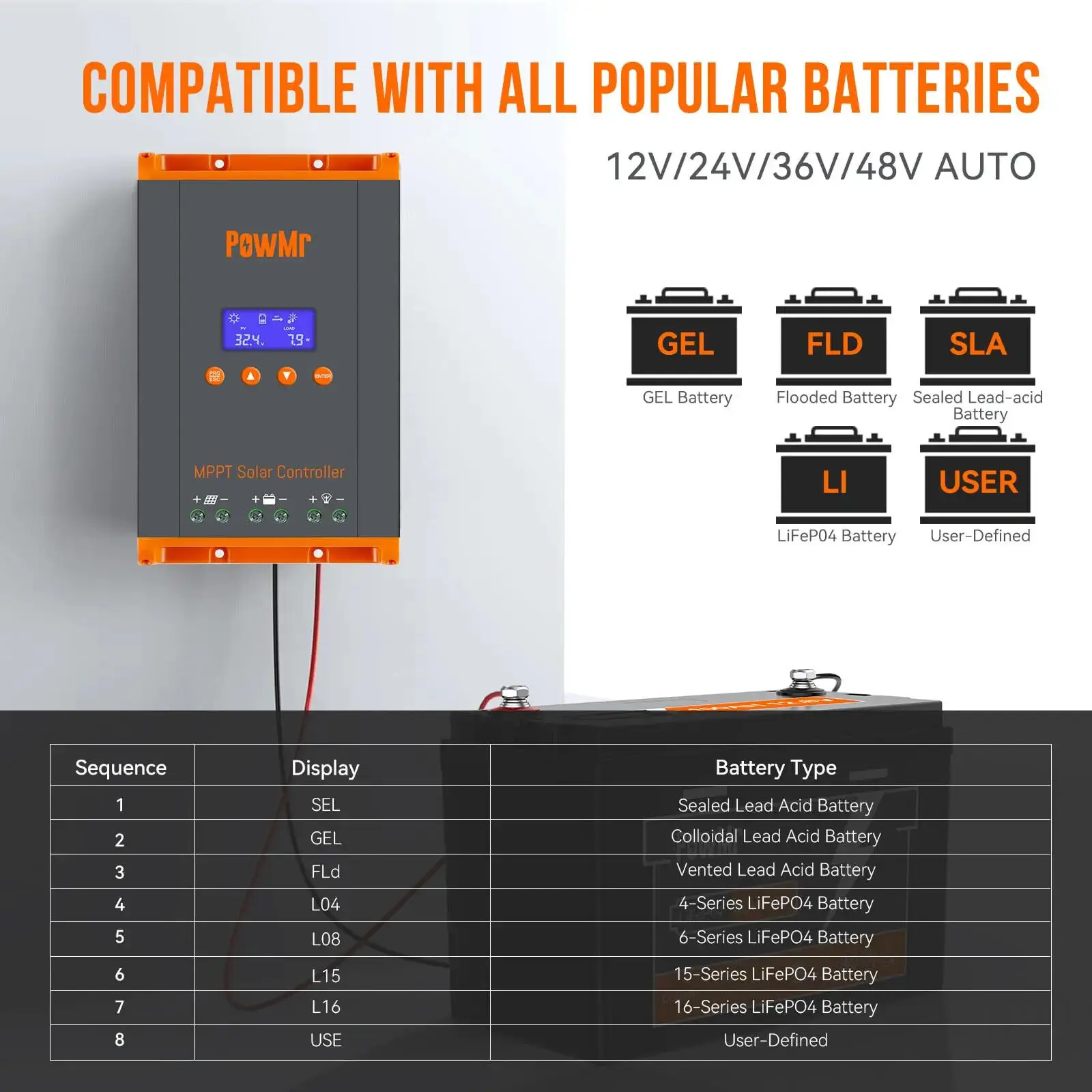
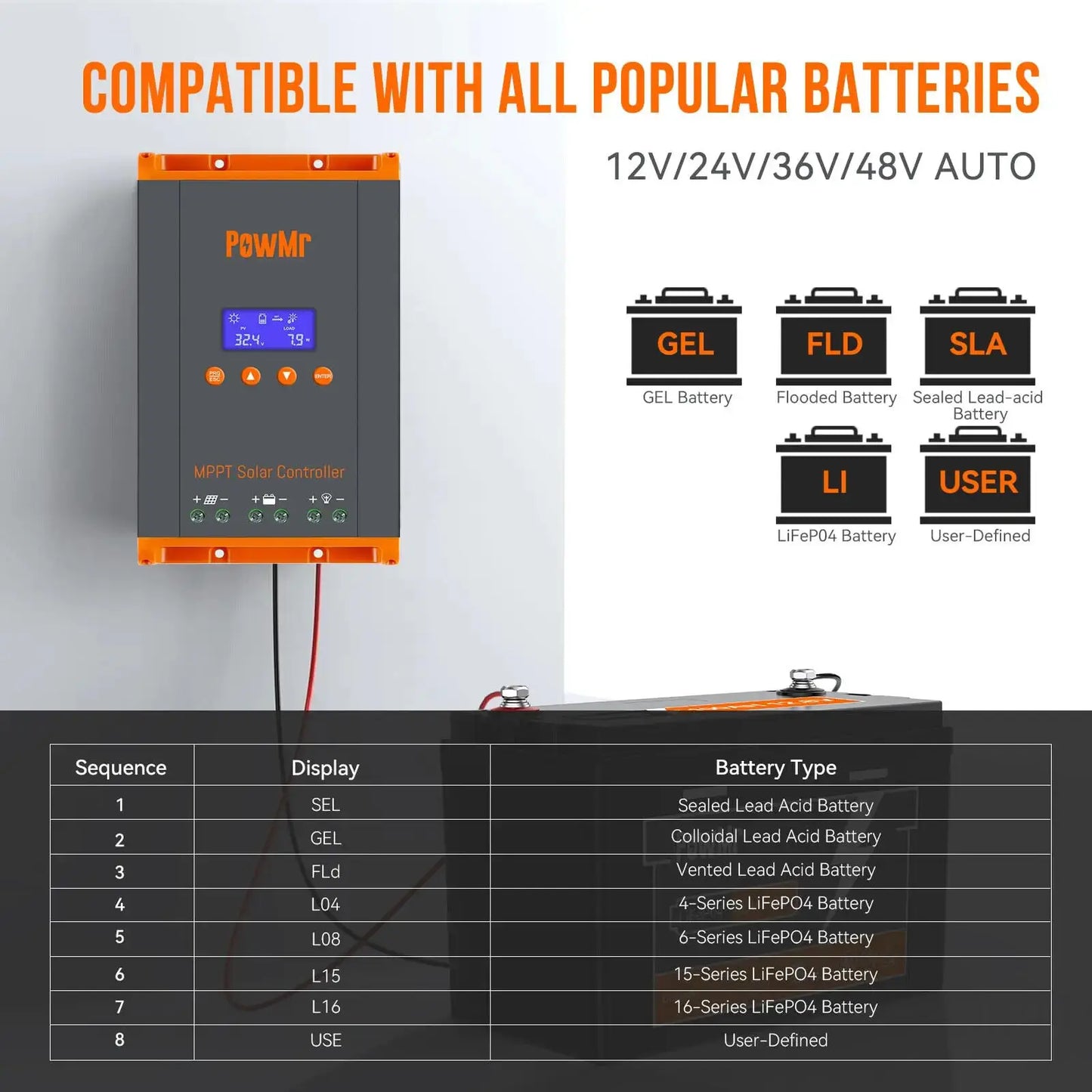
13 battery preset programs to choose from: AGM, Gel, FLD, Lead-Acid, LiFePO4 Lithium etc. Four charging stages (Bulk, Absorption, Float, and Equalization) and comprehensive electronic protection extend battery life.
Real-time statistics, display/modification of operating parameters via the POW-Meter(optional accessory).
Built-in protection against reverse polarity, overcharging, over discharging, overload, short circuit, and reverse current protects the battery from overcharging by the solar panels and over discharging by loads.